17-0 Football Manager
- 4.7
- Rating
- 100.00K
- Installs
- Free
- Price

 Analysis by App-foxy
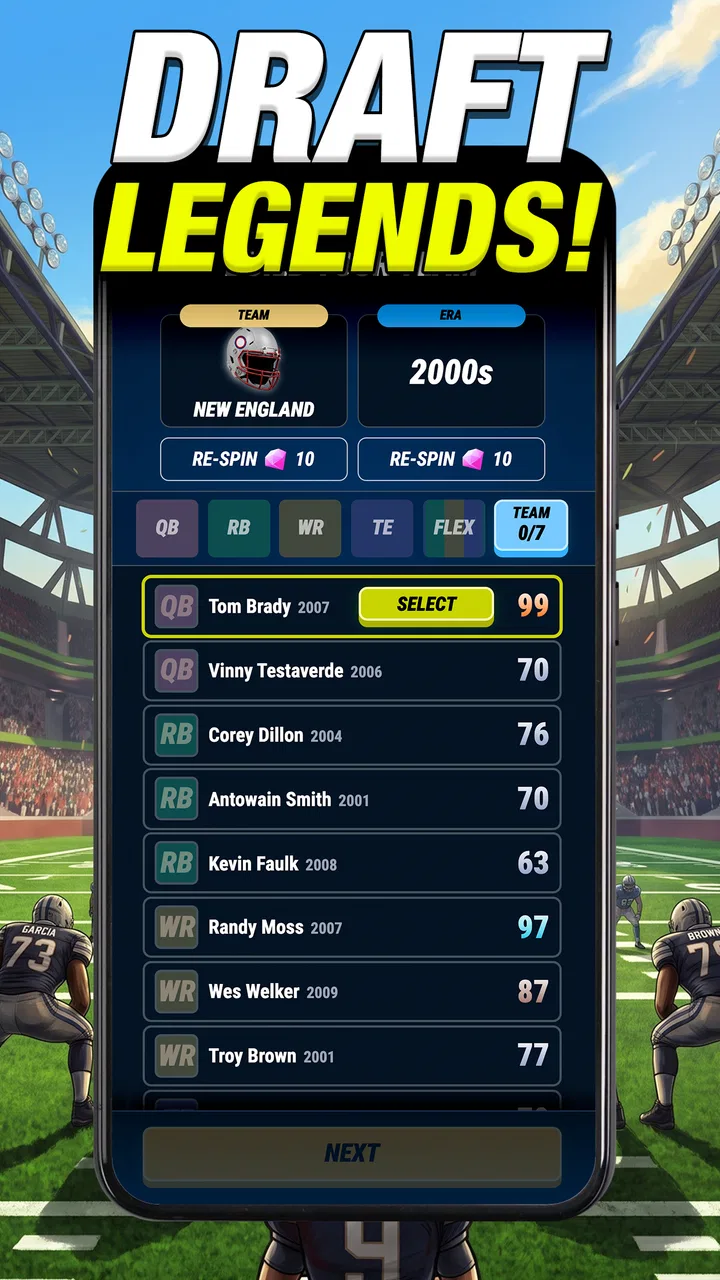
I went into 17-0 Football Manager expecting a quick sports game built around the fantasy of assembling a winning team, and that is exactly where its first appeal comes from. It is a free football management game from FunCraft Games, aimed at players who enjoy making decisions away from the pitch rather than controlling every pass themselves. The central idea is simple: build a squad around football legends, enter online competition, and try to turn a promising lineup into a championship contender.
What makes it immediately approachable is the clear fantasy behind it. You are not being asked to learn a complicated simulation before enjoying your first session. You can start thinking about which players belong together, how much risk to take with your choices, and whether a short-term improvement is worth changing the shape of your team. I found that the game works best when I treated each decision as part of a developing plan instead of chasing every attractive player or upgrade as soon as it appeared.
The game sits in the sports category, but its appeal reaches beyond people who normally play football titles. If you like card-based team building, competitive mobile games, or management games where small choices accumulate over time, the format is easy to understand. If you want direct control over movement, tackles, and shooting, however, this is not the right kind of football experience. Its satisfaction comes from preparation and selection, not from manually winning a match moment by moment.
You May Also Like

 Blood Strike: 2.5 Anniversary
Blood Strike’s Loadouts Turn Every Drop Into a Tactical Gamble
A close look at Blood Strike’s custom loadouts: how fast access to signature weapons reshapes its battle royale rhythm, rewards preparation, and narrows the gap between fights.

 Pandora - Music & Podcasts
Pandora’s Music Is Easy to Start, but Harder to Recover
Pandora’s strength is its low-effort path from a seed to a station. Its weak spot is how much confidence it asks you to place in connection, setup, and quiet recovery.

 8 Ball Pool
 Is Built on Rivalries, Rematches, and Routine
A close look at the rivalries, rematches, shared routines, and unanswered safety questions that turn a quick pool match into a persistent mobile community.

 Samsung Music
’s Quiet Strength Is Playing What You Already Own
Its reach comes less from spectacle than from dependable access to a personal library. That simplicity is both the app’s strongest retention engine and its ceiling.

 AccuWeather: Weather Radar
AccuWeather Review: A Quick, Clear Forecast for Everyday Decisions
For everyday plans, the best forecast is the one you can understand quickly. AccuWeather makes rain timing, radar, and local conditions easy to act on, with a few trade-offs.

 Hill Climb Racing
Why Hill Climb Racing Still Turns Crashes Into One More Run
A tiny car, a bumpy hill and one more upgrade: Hill Climb Racing keeps resurfacing because its simple chaos makes every near-miss feel personal.
More From Our News Desk



Why the first week feels so engaging
The opening stretch is strong because every new decision seems meaningful. A fresh player can change the balance of a squad, while a different tactical direction can make a previously awkward lineup feel more coherent. That sense of possibility is important in a manager game: the early team is not supposed to feel finished, and the gaps give you a reason to keep returning.
I also liked the way the football-legend theme gives the roster-building process an instant identity. Instead of beginning with an anonymous collection of athletes, you are encouraged to think in terms of recognizable names and the roles they might fill. That makes even a simple selection feel personal. The best early sessions were not necessarily the ones where I won; they were the ones where I could see why a particular combination worked better than another.
My practical advice is to resist making changes after every disappointing result. In the first week, it is tempting to replace half the team whenever a match goes badly. That makes it difficult to understand whether the problem came from the players, the arrangement, or a single unlucky outcome. I got more useful information by changing one important element at a time and watching whether the team became more reliable.
That approach also helps with the online-league side of the game. Competitive matches can make a new player feel as though progress depends entirely on having the strongest possible roster. In reality, learning what your current squad does well is more useful than constantly comparing it with opponents. A balanced team that suits your decisions is easier to manage than a collection of impressive names that do not fit together.
The first-week loop is particularly suitable for short sessions. I could check the squad, make a focused adjustment, and leave without needing a long uninterrupted play period. That makes it comfortable for a commute, a lunch break, or a few minutes before bed. The trade-off is that this same convenience can encourage frequent checking, especially if you are naturally competitive and want to see whether your latest decision has paid off.
How to build a useful routine instead of chasing novelty
One of the less obvious lessons is that the game rewards a review habit more than a constant shopping habit. Before looking for another improvement, I found it useful to ask three questions: which position is actually causing problems, whether the replacement solves a specific weakness, and whether the change makes the rest of the squad harder to use. This keeps the team-building process connected to performance rather than turning it into an endless search for something new.
I would also recommend keeping a simple mental record of your most dependable setup. When you experiment, change only one part of that arrangement. If the new version performs worse, you have a clear fallback instead of having to rebuild your thinking from the beginning. This matters in a game where the excitement of a new legend can easily distract from the practical needs of the team.
Another useful habit is separating progress goals from collection goals. A collection goal is about obtaining a player because the player is appealing. A progress goal is about correcting a weakness or making the squad more consistent. Both can be enjoyable, but confusing them is a fast way to spend resources without making the team better. For me, the game remained more satisfying when every major change had a football reason behind it.
What keeps the game relevant after the opening excitement
The long-term question is whether online leagues and championship ambitions provide enough recurring value once the initial discovery phase is over. They can, especially if you enjoy measuring your decisions against other players and gradually refining a team. The competitive structure gives ordinary roster choices more weight because the goal is not simply to finish a match; it is to create a setup that remains effective against changing opposition.
That said, the lasting appeal depends heavily on your tolerance for repeated decision-making. If you enjoy looking at the same squad from different angles, testing small changes, and accepting that improvement may be gradual, the game has a reasonable chance of becoming a regular part of your sports-game rotation. If you need a constant stream of dramatic new mechanics, the basic management loop may begin to feel familiar sooner.
I see the strongest month-to-month value in the tension between stability and experimentation. A team should become dependable, but not so fixed that you stop thinking. The useful middle ground is to keep a reliable core while testing one area at a time. That creates a personal project: not merely collecting legends, but learning which choices produce a team you can trust in competition.
The championship goal also gives the game a clear direction. Without a meaningful target, management games can become a sequence of disconnected upgrades. Here, the idea of winning the league gives your decisions context. Even when a particular session is quiet, you can judge it by whether it moved the team toward a stronger competitive position.
Still, online competition is not automatically enjoyable for everyone. Some players prefer a relaxed sports game where they can experiment without worrying about rankings or opponents. Others enjoy competition but dislike the feeling that a roster can determine too much of the result. For those players, a single-player football title or a direct-control game may offer a more comfortable kind of progress.
Where the maintenance burden appears
A management game asks for a different kind of attention than an action game. You may not need long sessions, but you do need to remember why your team is arranged a certain way. If you return after ignoring the squad for a while, the first task is not necessarily to make a dramatic change. It is to understand what has shifted, identify the current weakness, and decide whether the existing plan still makes sense.
That maintenance can be enjoyable when it feels like coaching. It becomes tiring when every return seems to demand several small corrections before you can play normally. My experience was that the burden stayed manageable when I used a narrow checklist: inspect the latest result, identify the biggest weakness, make one meaningful adjustment, and stop. Trying to optimize every detail at once made the game feel more like administration than sport.
The free entry point helps reduce the barrier to trying it, but the presence of in-app purchases from $0.99 to $49.99 per item makes spending discipline important. I would approach purchases as optional accelerators, not as a substitute for understanding the squad. The safest rule is to decide in advance whether you are playing for experimentation or for faster progression. If you are not sure what a purchase would improve, waiting is usually the better choice.
This is also where the game may suit different players in very different ways. Someone who enjoys gradual team building can treat the free version as a patient project. Someone who wants immediate access to the strongest possible lineup may feel pressure to spend. The game is more enjoyable when you choose the first mindset deliberately instead of allowing competitive frustration to make the decision for you.
Because the game is rated Everyone and requires Android 7.0 or later, it is positioned as an accessible option for a broad audience of mobile players. That does not mean every player will enjoy the management layer. Younger players may like the football-legend theme, while experienced sports-game fans may look for deeper control or more detailed simulation. The age rating describes accessibility, not the type of commitment the game demands.
What can cause fatigue over time
The biggest source of fatigue is repetition without a clear personal objective. If every session becomes the same cycle of checking the squad, replacing a player, and entering another competition, the novelty can fade. I avoided that by giving each period a small purpose: improve consistency, test a different team balance, or see whether a particular weakness was genuinely solved.
Another risk is overreacting to individual results. Competitive games naturally produce wins and losses, but changing direction after every outcome prevents you from learning anything. A manager game is more rewarding when you judge a decision over several situations rather than treating one result as a complete verdict. That patience is not glamorous, but it is one of the clearest differences between thoughtful play and frantic tinkering.
The legend-collection theme can create a separate kind of fatigue. Seeing appealing players is exciting, but it can also make your existing team feel inadequate even when it is performing well. I found it helpful to ask whether a new addition would solve a real problem or merely look impressive. That question protects the sense of progress and keeps the squad from becoming a pile of disconnected upgrades.
There is also a social pressure that comes with online leagues. Comparing your progress with other players can add motivation, but it can just as easily turn a casual game into a daily obligation. If you notice yourself checking only because you are afraid of falling behind, it may be time to reduce the frequency of play. A game should earn its place in your routine through enjoyment, not anxiety.
Who should try it, and who should skip it
I would recommend 17-0 Football Manager to players who enjoy football strategy, roster construction, and short sessions with decisions that carry into future matches. It is a good fit if the idea of building a team around football legends sounds more appealing than controlling every action on the field. It is also worth trying if you like online leagues but prefer preparing a squad to mastering fast controls.
I would be more cautious about recommending it to someone who wants a complete football simulation with detailed match control. The game’s identity is management, and that focus is both its strength and its boundary. Players who dislike repeated optimization, competitive comparisons, or optional spending systems may find a simpler offline sports game more relaxing.
For an everyday example, imagine having ten minutes between appointments. You can use that time to review the last result, identify one position that underperformed, and make a measured adjustment rather than starting a full match from scratch. Later, when you have more time, you can see whether the change holds up in league competition. That kind of split-session use is where the format makes the most sense.
Players wondering whether progress requires spending should begin with a clear personal limit and treat purchases as a choice rather than an expectation. Players wondering how often to return should use results and enjoyment as their guide, not a fear of missing a routine. And players unsure whether to rebuild should keep a dependable setup in mind before experimenting. These three habits make the game easier to enjoy without letting it take over your attention.
FunCraft Games has created a focused sports game rather than an all-purpose football package. Its average rating is 4.7 from around 1.8 thousand ratings, and the game has passed 50 thousand installs, which suggests that its straightforward management concept has found an interested audience. The current version is 1.0.39, and the game is free to start, with optional items available across a broad price range.
My long-term verdict
After the first-week excitement fades, the game’s future depends on whether you enjoy the craft of gradual improvement. Its strongest quality is not simply the promise of famous footballers; it is the way those players give structure to decisions about balance, risk, and consistency. The online leagues provide a reason to keep refining, while the championship objective prevents the experience from feeling completely directionless.
Its weaknesses are equally clear. Repeated team adjustments can become maintenance work, competitive play can create pressure, and optional purchases may complicate the feeling of fair, patient progression. None of those issues automatically ruins the experience, but they mean the game is best approached with boundaries. Decide what kind of player you want to be before the game’s competitive loop decides for you.
My final view is positive but selective. I would keep it installed if I wanted a compact football-management game that rewarded planning and gave me a reason to revisit the squad. I would not choose it as my main sports game if I wanted direct control, a relaxed offline campaign, or a highly detailed simulation. Its lasting value comes from thoughtful team building, not from endlessly chasing the next upgrade.
That distinction is what makes 17-0 Football Manager worth trying. It earns recurring space when you treat each session as a small coaching problem and allow your team to develop with some patience. If that sounds satisfying, the free entry point makes it easy to find out. If you prefer immediate action or dislike maintaining a competitive roster, you will probably know quickly that another kind of football game suits you better.
FAQs for 17-0 Football Manager
01What is 17-0 Football Manager?
17-0 Football Manager is a football management game focused on building and controlling your own team. Instead of playing every match directly, you take responsibility for important decisions such as selecting the squad, arranging tactics, managing transfers, and developing players. It is designed for users who enjoy strategy, planning, and the long-term challenge of turning a club into a successful team.
02How does the gameplay work in 17-0 Football Manager?
The main gameplay revolves around making decisions before and during a football season. You can organize your lineup, choose tactical instructions, monitor player performance, and respond to the strengths of upcoming opponents. Matches are generally experienced through management decisions and results rather than traditional action controls, so the game is better suited to players who enjoy thinking like a coach or sporting director.
03Can I manage transfers and develop my players?
Yes, team building is an important part of 17-0 Football Manager. Depending on the available game mode and version, you can review your squad, identify weaknesses, make recruitment decisions, and improve players over time. Successful management requires balancing talent, team roles, form, and resources instead of simply signing the most famous players, making squad planning a central part of the experience.
04Is 17-0 Football Manager free to download and play?
The availability and pricing of 17-0 Football Manager can vary depending on whether you download it on Android or iOS and which version is listed in your region. The game may be free to install while offering optional purchases, advertisements, or other paid features. Before downloading, check the official store page for current pricing, in-app purchase details, age rating, and device requirements.
05Does 17-0 Football Manager require an internet connection?
Some features of 17-0 Football Manager may work offline, particularly basic squad management or previously available single-player content, but online access can be required for downloads, updates, account services, leaderboards, cloud saves, or connected competitions. Because requirements can change between versions, it is best to review the store description and test the game with your connection disabled before relying on it during travel.
Pros
- Simple controls make matches easy to manage on mobile.
- Quick seasons suit short play sessions.
- Squad decisions give matches a strategic feel.
- Lightweight gameplay should run well on many devices.
- Football-focused interface is easy to understand.
Cons
- Limited depth may disappoint experienced management-game fans.
- Progress can feel repetitive after several seasons.
- Some features may require in-app purchases or ads.
- Match outcomes can occasionally feel unpredictable.
- Small-screen menus may make detailed planning less convenient.

17-0 Football Manager
Gallery